
News

Oil ministry proposes higher age limit, shorter tenure for ONGC chairman

[ad_1] A year after the government headhunter failed to find any suitable candidate for top job at ONGC, the oil ministry has proposed raising of eligibility age as well as a shorter tenure for the new chairman and managing director of India’s top oil and gas producer. The ministry has proposed that any candidate to be eligible for consideration should not be more than 60 years of age on the date of occurrence of vacancy, according to the ministry’s office memorandum sent to the Department of Personnel and Training (DoPT) on June 17. The vacancy arose after Shashi Shanker superannuated on March 31, 2021. Presently, the minimum age prescribed for being eligible for the top job is 45 years. Besides, internal candidates need to have two years of residual service as on the date of vacancy and three years for external candidates. What the ministry has proposed now is that any eligible candidate who is not more than 60 years of age at the time of occurrence of vacancy which was April 1, 2021, should be considered eligible. This would essentially mean that the current acting chairman, Alka Mittal, who otherwise would retire in August-end and was ineligible, would come under the zone of consideration. The ministry has also proposed appointment for a period of three years from the date of joining instead of the present five-year term, according to the letter. The selection will be done through a three-member search-cum-selection committee headed by PESB chairman and composed of oil secretary and former Indian Oil chairman B Ashok (outside expert). The panel was formed on February 4, 2022 but the terms of reference are being framed only now. Most board-level appointments at public sector companies are done on the basis of recommendations of the Public Enterprise Selection Board (PESB) but the government headhunter in June last year did not find anyone suitable among nine candidates, including two serving IAS officers, to head Oil and Natural Gas Corporation (ONGC). “Keeping in view the strategic importance and vision for the company and its future, the board did not recommend any candidate and decided to constitute a search committee,” the ministry letter said referring to PESB’s interviews on June 5, 2021. The panel was constituted after eight months of that recommendation on February 4. The Appointments Committee of the Cabinet (ACC) approved “consideration of central government officers, including those of the armed forces of the Union and the all India services for the post on immediate absorption basis.” “Energy security is critical for the nation. ONGC plays a pivotal role in exploration as India’s National Oil Company (NOC). Its activities need to be scaled significantly and rapidly. As an NOC, it is necessary to have a specially designed ‘sui generis’ job description for ONGC in order to attract the best talent available,” it said. If accepted, the proposal will throw open the field for ONGC’s former director (finance) Subhash Kumar as well as current acting chairman Alka Mittal, who otherwise were ineligible for the post. As per the practice, PESB recommends a name for a board-level position at least three months prior to arising of the vacancy. However, in the case of ONGC, PESB advertised and interviewed candidates after the retirement of Shashi Shanker on March 31, 2021. After Shanker retired, Subhash Kumar, director for finance and senior most director on ONGC board, was given the additional charge of chairman and managing director. Kumar retired on December 31, 2021 and Alka Mittal, Director for Human Resources, ONGC, was given additional charge. She will superannuate in August. Other internal directors of ONGC would also become eligible due to the age relaxation. The committee route for appointment of PSU board members has very sparingly been used in the past. In 2016, current NTPC chairman Gurdeep Singh was appointed through the route. Last appointment using the route was that of Sanjeev Kumar as the chairman of Telecommunications Consultants India Limited (TCIL). PESB had on June 5, 2021, interviewed nine out of the 10 candidates who had applied for the post of chairman and managing director of ONGC. Those interviewed included senior bureaucrats Avinash Joshi and Niraj Verma. Mangalore Refinery and Petrochemicals Ltd (MRPL) director-finance Pomila Jaspal and ONGC director for technology and field services Om Prakash Singh were the other prominent names who were interviewed, as per the PESB notice. Both the bureaucrats are from the 1994 batch of IAS officers belonging to the Assam-Meghalaya cadre. Others interviewed by PESB were ONGC executive directors Sandeep Gupta, Pankaj Kumar and Omkar Nath Gyani, ONGC additional director general Anand Gupta, and Container Corporation of India director-finance Manoj Kumar Dubey. Security Printing and Minting Corp of India Ltd director-finance Ajay Agarwal, who had applied for the job, did not appear for the interview. This was the second time in one-and-a-half decades that a suitable candidate was not found among those who had applied. In August 2006, PESB chose R S Sharma to head the company but the Prime Minister’s Office (PMO) in February 2007 vetoed his appointment as it wanted the selection process to be widened by inviting candidates from the private sector. In June 2007, PESB again selected Sharma and his candidature was this time endorsed by the Appointments Committee of Cabinet (ACC). While a replacement to the PSU board position is often selected before the incumbent retires, PESB did not hold any interviews for almost seven months as its chairman wasn’t appointed. The government in April 2021 named Mallika Srinivasan, chairman and managing director of Tractors and Farm Equipment (TAFE) Ltd, as the new chairperson of PESB. She is the first person from the private sector to be appointed as the head of PESB. [ad_2] Source link

Oil ministry proposes higher age limit, shorter tenure for ONGC chairman Read More »

Everyday Solid Ruffled Dress only $16.99 shipped!

[ad_1] These Everyday Solid Ruffled Dresses are perfect for summer! Jane has these Everyday Solid Ruffled Dresses for just $16.99 shipped right now! You can wear this dress with a pair of sandals during warm weather, and then layer with tights and switch to boots for a cool-weather twist. Choose from seven colors. Psst! We love Jane! Looking for other great Jane deals? Check out our custom Jane page for more of our hand-picked favorite deals each day! [ad_2] Source link

Everyday Solid Ruffled Dress only $16.99 shipped! Read More »

How ed-techs are empowering professionals?

[ad_1] By John Kallelil Organisational success depends on many crucial factors but there is no denying that people are at the heart of any business. This is why enterprises need a smart workforce that is in tune with the evolving times. As a result, businesses are increasingly investing heavily in learning and development initiatives to bring their teams up to speed and boost the overall productivity score. A significant shift in hiring: adopting the skill-first approach The traditional approach to hiring relied on checking off a few parameters and boxes, such as work experience, educational background etc. However, in today’s skill-based economy, the scenario has become more interesting. It no longer suffices to have your degrees and industries aligned to the job one is applying for. Businesses are focused more on the specific skills required for a role and the aspirant’s ability to reskill/upskill with time. According to World Economic Forum 42% of jobs will require a different set of skills in the next three years and more than one billion workers will need reskilling by 2030. Considering the growing skills gap globally, enterprises need to match both current employees and new hires to new-age skills and roles. LinkedIn’s research highlights that the skill sets for jobs have changed by around 25% since 2015. It further states that this number is expected to double by 2027. This implies that the jobs are evolving even if the talent isn’t switching jobs. Similarly, the business requirements are also changing even if the organisations aren’t changing their business strategies. As per OECD’s (Organisation for Economic Co-operation and Development) projections, more than a billion jobs, that is, one-third of jobs at the global level are expected to undergo transformations due to technology in the next decade. These stats are indicative of the fact that having skills or rather being skilled thus becomes imperative. The widening skill gap The job landscape has shifted dramatically at the global level. Demographic changes coupled with technological advancements have led to this paradigm shift and it is believed that the next decade will see new jobs emerge that require additional skills and knowledge.  Companies of all sizes have a challenging time keeping up with the pace of technological advancements. Though the latest technology creates powerful business opportunities, it also widens the skill gaps. This happens specifically in industries like healthcare, IT, construction & real estate, and manufacturing, where skilled workers are much sought after. In the current scenario, especially within the Indian marketplace, there is a widening gap between available jobs and talent. As per the India Skill Report 2019, only 45.6% of the youth graduating are employment ready. The primary reason behind this is that a major proportion of the workforce either doesn’t possess the requisite skillset or doesn’t qualify for those specific job roles. The emerging job market demands and expects skills that go beyond what the public or private education system is offering currently. And this gap is only going to widen in the future. In such a scenario, professionals can no longer rely on their existing skills and education. In order to stand from the crowd, they will have to upskill themselves so as to be prepared for the future as it evolves. Upskilling: the dire need of the hour The process of upskilling refers to learning new skills and improving one’s competencies. In today’s fast-paced world, technological advancements coupled with the emergence of Artificial Intelligence have made skill enhancement inevitable. Blockchain analyst, Chief Security Officer, podcast producer, telemedicine physician, cloud architect, drone operator, chief listening officer, market research data miner – just a handful of jobs that didn’t exist a decade ago. Upskilling is not only necessary for job aspirants and candidates who are embarking on their career journey, it is even more important for seasoned and experienced professionals who are now making decisions based on a new technology strategy and tool stack For this, Chief Learning Officers must look beyond traditional approaches and seek out more efficient upskilling methods such as immersive learning.  Ed-tech: An effective solution for upskilling professionals Executive education combined with technology has a force multiplier effect on the workforce. EdTech has empowered participants across the globe access to international education, acclaimed professors and prestigious universities. With the help of educational apps, live-online training and superior connectivity, the world is quite possibly the biggest classroom right now. For professionals, it has opened up a plethora of opportunities. Upskilling in the traditional paradigm meant that candidates were bound by geography, time zones, and had to take a sabbatical from work. But technology has opened up avenues for aspirants now. You can access international universities and faculty for specialized training in topics ranging from digital transformation, strategy, financial leadership, emotional intelligence to data science, blockchain and Web 3.0. All this without disrupting your work-life balance as technology makes it possible to learn at your own pace. Ed-tech platforms today play a vital role in bridging this talent-skill gap by enabling upskilling through high-quality learning from top global universities. Many players are making concerted efforts to offer global quality education to learners catering to future-centric capabilities and skillsets. They then design their programs in accordance with the requirements to help navigate organizations with the skills-first approach. Today’s executive education programs empowered by technology offer leadership insights and business acumen for dealing with the new normal and real-world challenges. Since the demand for customized education is on a surge, these ed-tech platforms are focusing on providing both custom programs and open programs that fulfill the needs of senior managers and businesses across sectors. With a focus on experiential learning, EdTech transforms learners into leaders and innovators of the future! The author is founder and director, XED Institute. Read also: CNI asks city schools to reduce summer vacation and start physical classes from June 20 [ad_2] Source link

How ed-techs are empowering professionals? Read More »

Acacia Wood 7-Piece Patio Dining Set only $629.99 shipped (Reg. $1,330!)

[ad_1] This Acacia Wood 7-Piece Patio Dining Set is so pretty! You can get this Acacia Wood 7-Piece Patio Dining Set for just $629.99 shipped when you use the promo code BC89PATIO at checkout! This dining set is made of strong wood with a metal frame. Perfect for the garden, balcony, poolside, or deck. Valid for a limited time only. [ad_2] Source link

Acacia Wood 7-Piece Patio Dining Set only $629.99 shipped (Reg. $1,330!) Read More »

Govt directs GENCOS to buy rakes for captive use to ensure smooth coal supply during monsoon

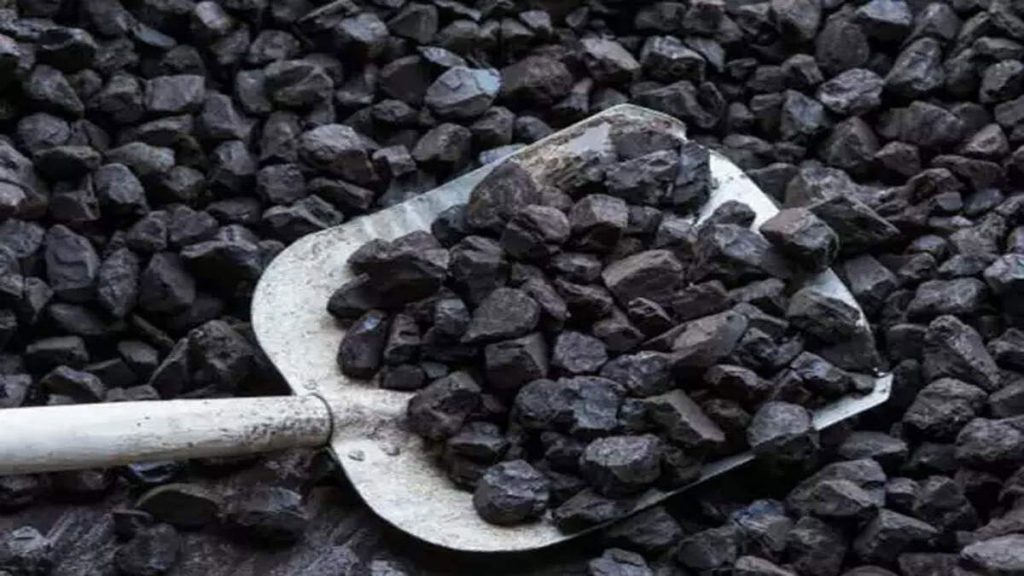
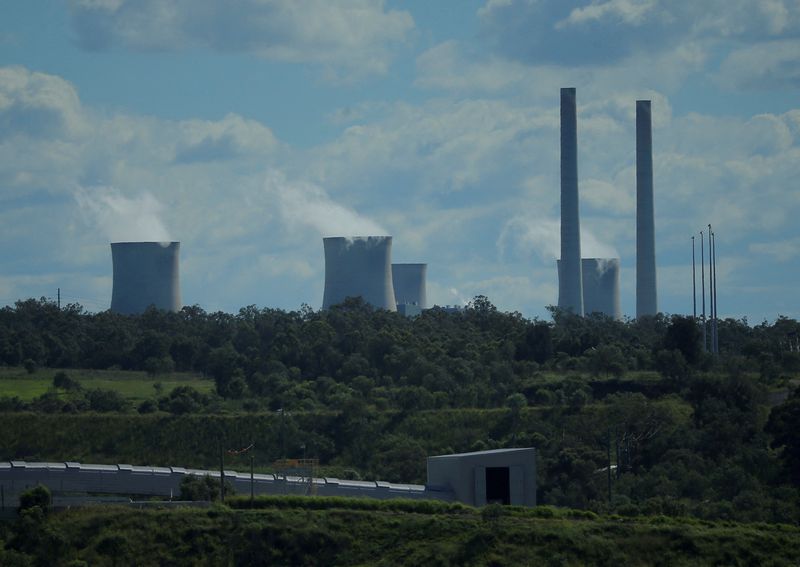
[ad_1] The government has directed the power generation companies (GENCOS) to buy rakes for captive usage, a move which will ensure smooth supplies of coal during the monsoon season. Each year during the monsoon season, the production of domestic coal also falls, Power Minister R K Singh told PTI. When asked if the government is making rake arrangements anticipating production and supply issues during the approaching rainy season, he replied in the affirmative. “That (rakes) is another problem,” Singh said adding the Coal Ministry has been saying that there are locations where there is dry fuel but transportation is not happening to the extent of availability. He cited the shortage of rakes besides congestion on some routes as the main reasons for this problem. There are actions which the Railways need to take to reduce the congestion on those lines so that more coal can be evacuated from these places. In some areas, the Coal Ministry will have to up the production where enough rakes are available, the Minister said.Without sharing any details, he further said “the Indian Railways is buying more rakes. I have also asked the GENCOS to invest in rakes. “You can own rakes and you save on transport cost and that pays for itself in about 9-10 years and the rake itself runs for about 25-30 years. NTPC already owns rakes, they are going to increase their rakes. I have asked all state GENCOS to own rakes to reduce load on railways.” The Minister has also said that the government is gearing up to increase the stock of coal at power plants to 40 million tonnes (MT) during the monsoon season. At present, there are reserves of around 22.9 MT at the power plants. [ad_2] Source link

Govt directs GENCOS to buy rakes for captive use to ensure smooth coal supply during monsoon Read More »

Ooly Art Supplies Sale + Exclusive Extra 15% off!

[ad_1] These Ooly Art Supplies would make such fun gift ideas for anyone who loves to create! Right now, Zulily is having an Ooly Art Supplies sale with prices starting at just $6.99! Plus, when you spend $50+ on Zulily today, you will save an extra 15% off at checkout. These are so many fun items in this sale including paint sticks, markers, coloring books, gel pens, sketchbooks and more. Shipping starts at $6.99. But if you place one order today, the rest of your orders will ship for FREE through 11:59 p.m. PT tonight! [ad_2] Source link

Ooly Art Supplies Sale + Exclusive Extra 15% off! Read More »

Past continuous

[ad_1] During a recent promotion for his film Samrat Prithviraj, Bollywood actor Akshay Kumar kicked up a storm by commenting that rulers such as Prithviraj Chauhan “should be written about” in Indian history textbooks. “There were only three-four lines about Samrat Prithviraj in the history books that I read. Thanks to this film, I got to know so much about him. I don’t think anyone else also knew about him,” he said during an interview, adding, “When I was talking to my son about him (Prithviraj), he said, ‘I know about the British empire, Mughal empire, but who’s he?’ So, it’s a sad thing that we don’t know about our own kings. There were only a few lines about Rana Pratap, Rani of Jhansi. But there are a lot of chapters on Mughals.” He also appealed to the education ministry to “try and (bring about) balance and bring our culture, Hindu kings also in our textbooks”. Kumar’s view found both takers and opponents, but the debate over the rewriting of history textbooks for political gains has been raging over the years, and successive governments at both the states and the Centre have often been accused of promoting their own ideologies through them. While history textbooks have often come under the scanner for alterations in content, what about children’s and general history books? Authors and publishers of such books—both fiction and non-fiction—say their challenge is not to question history but to present it to kids in a way that engages them. Tina Narang, publisher, HarperCollins Children’s Books, says: “For students, there is a certain comfort in knowing that what they have studied in subjects like history is not likely to change. History is based on facts and unless current research throws light on some unexplored aspects there is little scope to change it. That’s what makes it history. As publishers, our challenge is not to question history and its facts as set down in textbooks by subject experts but to present it to children in a way that engages them,” she says. Narang suggests making history more engaging through visually-driven formats, a better balance between text and visuals and using the narrative non-fiction approach to make history a subject that kids want to read for reasons other than just writing an exam. The curriculum debate English novelist George Orwell had once said that “the most effective way to destroy people is to deny and obliterate their own understanding of their history”. The quote can be viewed in the light of the recent developments cooking up in the Indian history curriculum debate. In recent times, ghosts of the past have been resurrected many times in debates and for political gains. BJP leader Nupur Sharma’s quote on Prophet Muhammad led to India being criticised by Islamic nations for insulting a religious leader, even though the national party maintained its stance that it respected all religions. In December 2021, the Delhi High Court refused to entertain a PIL demanding the removal of a paragraph in the Class XII textbook of history. The paragraph had talked about Mughal rulers like Shah Jahan and Aurangzeb giving grants for repair of temples. The high court bench came down heavily on the petitioners for wasting the court’s time. On Saturday, it was reported that the National Council of Educational Research and Training (NCERT) had removed portions on the 2002 Gujarat riots, the Emergency, Cold War, the Naxalite movement and Mughal courts from its textbooks of Class XII. The removal was stated as a “syllabus rationalisation” exercise and NCERT cited reasons such as “overlapping” and “irrelevant” for dropping the portions. Some of the changes had been announced earlier this year when the Central Board of Secondary Education (CBSE) had rationalised its syllabus. Earlier in May, it was reported that several BJP-ruled states had been altering history textbooks like the addition of a few paragraphs in a Class IX history textbook by the Haryana government on Congress’ ‘appeasement policy’, and the Gujarat government’s addition of parts of Bhagavad Gita in the Class VI-X syllabi. The Haryana Board of School Education (HBSE) was also in the news recently for its Class IX history textbooks that stated that Congress’ greed of power was the reason behind India’s Partition in 1947. Many states justified the recent altering of history textbooks in accordance with the National Education Policy (NEP) to provide an India-centric education. The altering of history with changing political regimes is not a new fact. In the past, the Atal Bihari Vajpayee government was in a spot for attempting to saffronise education and the Congress was blamed for putting too much spotlight on Mughal history. However, authors and historians will agree that political involvement in designing curriculums may distort historical representation. Tilottama Shome of Talking Cub, the children’s imprint of independent publishing house Speaking Tiger, feels that political powers must have no role in designing curriculums. “History is a foundation on which a culture builds its future. And while history may be twisted by the powerful, it’s quite clear that it is possible to delve and find different versions of a story because stories get narrated over time.” She suggests that school textbooks need to get the nod of scholars from diverse backgrounds to arrive at the curriculum. “A country like ours that is diverse and historically an amalgamation of different influences needs to recognise all major influences and that should reflect in our textbooks,” Shome says. Her recent books with Talking Cub include Taj Mahal: The Story of a Wonder of the World and The Kailash Temple at Ellora: Magnificent Monuments of India. What students are fed through books becomes their learning and knowledge and shapes their future. So, the important questions remain: Who writes the history —the politicians or the historians? Should history be altered for one’s political gains? Who decides what to include and what to delete from history? A learning process As children, one would read storybooks of Akbar and Birbal, the Ramayana and the Mahabharata, which

Past continuous Read More »

Polynion

Binance Prediction

Metamask

papamiaspizza.com

RAJANAGA99

RAJANAGA99

RAJANAGA99

RAJANAGA99

RAJANAGA99

RAJANAGA99

RAJANAGA99

RAJANAGA99

RAJANAGA99

RAJANAGA99

RAJANAGA99

RAJANAGA99

RAJANAGA99

RAJANAGA99

RAJANAGA99

RAJANAGA99

RAJANAGA99

RAJANAGA99

RAJANAGA99

RAJANAGA99

RAJANAGA99

RAJANAGA99

RAJANAGA99

RAJANAGA99

RAJANAGA99

RAJANAGA99

RAJANAGA99

RAJANAGA99

RAJANAGA99

RAJANAGA99

RAJANAGA99

RAJANAGA99

RAJANAGA99

RAJANAGA99

prediction market

prediction market

prediction market

prediction market

prediction market

prediction market

prediction market

prediction market

prediction market

prediction market

prediction market

prediction market

prediction market

prediction market

prediction market

prediction market

binance prediction

indodax prediction

bybit prediction

bitget prediction

okx prediction

tokocrypto prediction

metamask prediction

pintu prediction

kraken prediction

xe prediction

kucoin prediction

bitmart prediction

lbank prediction

coinex prediction

bingx prediction

bitcompare prediction

huobi prediction

xt prediction

luno prediction

bitfinex prediction

bitrue prediction

upbit prediction

zipmex prediction

bitpanda prediction

safepal prediction

bitstamp prediction

bittrex prediction

prediction market

prediction market

prediction market

polynion

polynion

polynion

polynion

polynion

polynion

polynion

prediction market

prediction market

prediction market

prediction market

prediction market

prediction market

prediction market

Usdt

token Ethereum

solana token

bscscan token

prediction market

prediction market

opinion market