
[ad_1]
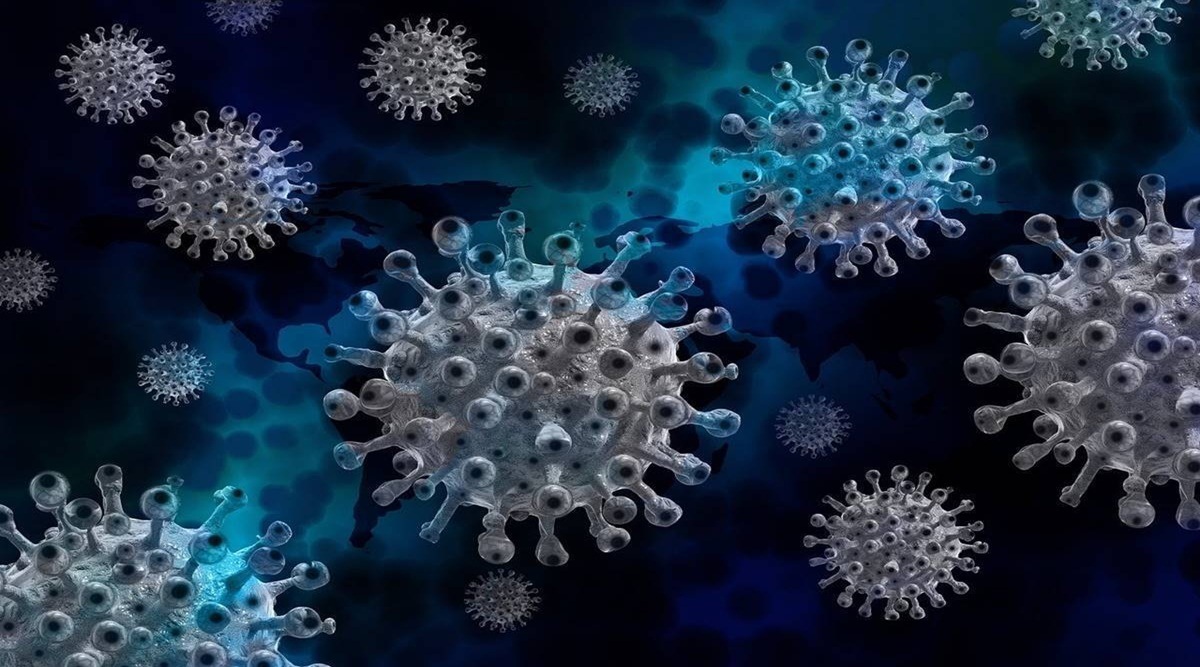
Scientists in the US have developed an inexpensive, non-toxic coating for almost any fabric that decreases the infectivity of SARS-CoV-2, the virus that causes COVID-19, by up to 90 per cent. The coating, described in the journal ACS Applied Materials & Interfaces, may be used in future to develop an antiviral spray for fabrics.
“When you are walking into a hospital, you want to know that pillow you are putting your head onto is clean,” said study lead author Taylor Wright, a doctoral student at the University of British Columbia (UBC) in Canada. “This coating could take a little bit of the worry off frontline workers to have personal protection equipment (PPE) with antimicrobial properties,” Wright said.
Researchers soaked fabric in a solution of a bacteria-killing polymer which contains a molecule that releases sterilising forms of oxygen when light shines on it. They then used an ultraviolet (UV) light to turn this solution to a solid, fixing the coating to the fabric.
“This coating has both passive and active antimicrobial properties, killing microbes immediately upon contact, which is then amped up when sunlight hits the cloth,” said senior study author Michael Wolf, a professor at UBC.
Both components are safe for human use, and the entire process takes about one hour at room temperature, the researchers said. It also makes the fabric hydrophobic, meaning microbes are less likely to stick to the cloth, and doesn’t seem to affect the strength of the fabric, they said.
The coating can also be used on almost any fabric, including cotton, polyester, denim, and silk, with applications in hospital fabrics, masks, and activewear, according to the researchers. Whereas other such technologies can involve chemical waste, high energy use, or expensive equipment, the new method is relatively easy and affordable, they said.
“All we need is a beaker and a light bulb. I am fairly certain I could do the whole process on a stove,” Wright said. To test the coating’s bug-killing properties, the researchers bathed treated fabric in bacterial soups of Escherichia coli (E. coli and Methicillin-resistant Staphylococcus aureus (MRSA), both major sources of hospital-acquired infections. They found there were 85 per cent of viable E. coli bacteria remaining after 30 minutes, which fell to three per cent when the treated cloth was exposed to green light for the same amount of time. Similarly, 95 per cent of viable MRSA bacteria remained, dropping to 35 per cent under green light. No bacteria remained after four hours.
The researchers also looked into whether the coating reduced the infectivity of SARS-CoV-2 by bathing treated fabric in a solution of the virus particles and then adding that solution to living cells to see if they could infect them. They found the passive properties were not effective against the virus, but when treated fabric was exposed to green light for two hours, there was up to 90 per cent decrease in the infectivity of SARS-CoV-2.
“In other words, only one tenth of the amount of virus signal was detected on cells infected with the UV-fabric and light treated virus,” said study co-author Francois Jean, a professor at UBC.
The team found they needed an 18 square centimeter piece of fabric to kill microbes with material containing seven per cent weight of the active ingredient. However, increasing this to 23 per cent weight improved the effectiveness of the fabric at four times less material.
“Biomanufacturing face masks based on this new UBC technology would represent an important addition to our arsenal in the fight against COVID-19, in particular for highly transmissible SARS-CoV-2 variants of concern such as Omicron,” said Jean. The coating can also be used for activewear, with an ‘anti-stink’ coating applied to areas where people tend to sweat, killing off the bacteria that makes us smell. The researchers noted that hospital fabric and activewear companies are already interested in the technology, and the university has applied for a patent in the US.
[ad_2]
Source link